
Latvia · Nordic and Baltic
Latvian scalded rye
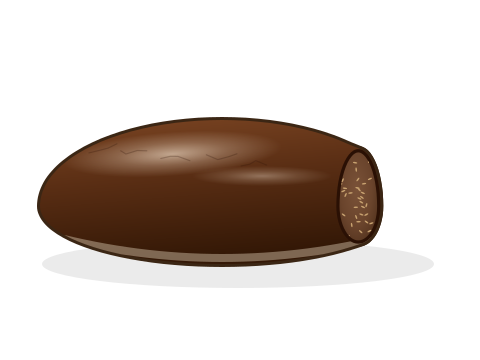
Traditionally sourdoughLatvia's protected rye loaf (TSG): a third of the rye is scalded with caraway and unfermented malt, held hot, soured with sourdough as it cools, then made into a dense, sweet-sour loaf, baked hot on the hearth and glazed with starch while hot. The two batch recipes read are for 10 kg of flour; the plan is the app's home-scale translation.
Hydration 66–74%. A scald of rye, caraway and malt, soured · the Latvian dark loaf
250 °C, turned down to 200 °C, about 1 h — Ginsberg's home bake; the two batch recipes start at 280–350 °C.
A starch glaze on the hot loaf in all three recipes read. The plan is the app's home-scale translation of two batch recipes for 10 kg of flour: water 70%, sugar 8%, salt 1.75%, caraway 0.9%, malt 2.5%, one loaf of 1 kg.
The app's own version, from 3 published recipes from 3 sources.
Contains: rye and barley (cereals containing gluten). From the plan's rows only — check the labels of what you buy.
Which way
- The scalded loaf (TSG)
- Latgalian: sour-scald at 55 °C, then yeast — Ginsberg's Latgalian rye (The Rye Baker): a scald held at 65 °C, the sponge stirred in and held at 55 °C, then a pinch of yeast overnight. Salt 0.51% is the author's figure.
- Coarse, unscalded (The Rye Baker) — A sponge-and-batter rupjmaize without a scald: coarse and medium rye meal, 100% water, a sponge of 9% of the flour; the plan uses Hamelman's one-stage sour for it. 220 °C 45 min, then 180 °C 40–45 min; rest 24–48 h (The Rye Baker).
Plan this bread in the app
Say when the bread should be ready and how much you want to bake, with yeast or sourdough. The app then plans backwards: every step with a clock time, around your sleep and your day, for up to three doughs at once.


For iPhone and Android.
 Norwegian grovbrød
 Danish rugbrød
 Lompe
 Flatbrød
 Tunnbröd
 Gáhkku
 Kavring
 Ruisleipä